Swamp
The Knife of Never Letting GoThe Swamp lies where the river descending past Prentisstown spreads into marshland, a place that is at once a physical hazard, an ecological aftermath of war, and a striking counterpoint to the town’s oppressive Noise. To Todd Hewitt, its layered sounds are less a form of social exposure than evidence of life continuing on its own terms; within that landscape, he also detects a silence that ordinary natural quiet cannot explain.
Geography and Ecology
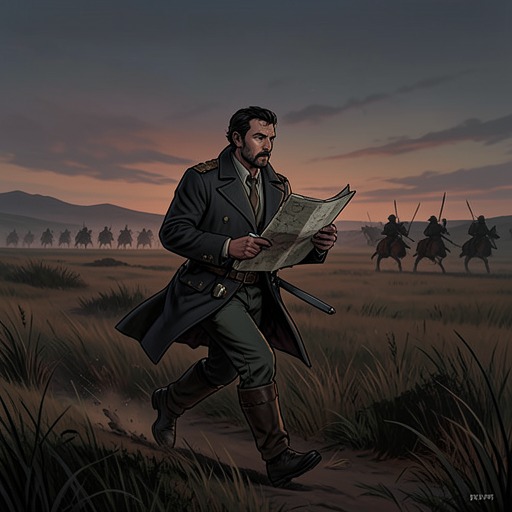
The river runs down a series of gulches east of Prentisstown, from beyond the Hewitt farm, and flattens into marsh before reaching the Swamp. The transition matters: the marsh is a danger zone in its own right, where Crocs can conceal themselves among growth that resembles the surrounding rushes. Todd understands that an encounter with one could be fatal to him and Manchee, so their route keeps clear of the river and marsh until they reach safer paths through the trees.
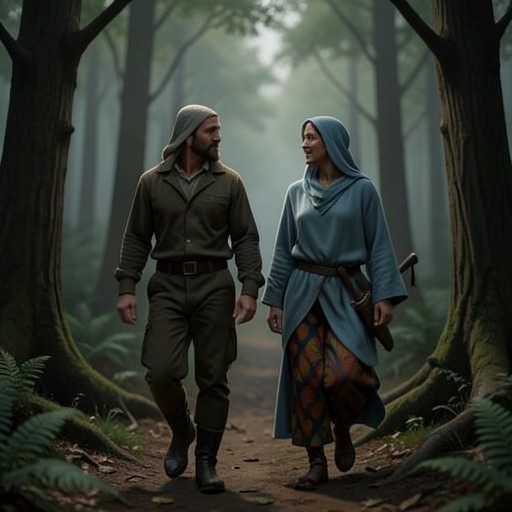
Inside the Swamp, the terrain is dense and difficult. Paths wind around the worst of the water and between large, bulbous trees that rise toward a high, needled canopy. The air is heavy and the light limited, but openings in the roof let slashes of daylight through. The place is not empty or inert: birds, green and red snakes, frogs, kivits, squirrels, and Cassor inhabit it. The red snakes present another hazard, yet the abundance of creatures also makes the Swamp feel, to Todd, alive and comparatively welcoming.
War and the Swamp’s Past
The Swamp carries the material residue of the war between humans and the Spackle. Todd understands from Ben that the Spackle buried their dead in the water, where their bodies and the wetland were compatible; their remains enriched rather than poisoned the place. That account makes burial part of the Swamp’s cycle of life, not simply a sign of death.
The scale of killing eventually overwhelmed that process. So many Spackle bodies accumulated that even this extensive wetland could not absorb them at once. Todd recalls a period when the Swamp was overwhelmed by decay before it gradually returned to its living state. The contrast between its present abundance and that remembered devastation gives the landscape a history that the town’s account of a world emptied of Spackle cannot make harmless: the Swamp is fertile again, but its ecology has been shaped by mass death.
A Different Soundscape
The Swamp is quieter than Prentisstown, but it is not silent. Its animals make sounds that Todd interprets as responses to unfamiliar presence and possible danger. In the town, by contrast, Noise is an intimate flood: from below the hill he can hear all 146 remaining men, their thoughts pressing in on him. The Swamp’s sounds do not feel like the town’s knowledge of him turned against him; their difference gives him room to experience the surroundings as curious rather than controlling.
Other settlements show that people try to manage this same condition by different means. In Farbranch, music plays continuously, faint at Doctor Snow’s house but so loud in the settlement that people struggle to hear themselves think. Doctor Snow explains that the music is intended to keep men’s thoughts private. The policy makes sound an instrument for containing Noise, whereas the Swamp offers no such organized barrier: its relative quiet comes from distance, living surroundings, and the absence of the town’s concentrated human chorus.
The contrast also sharpens the threat Todd associates with Mayor Prentiss. Near the Mayor’s House, Prentiss and his closest men practise counting, imagined shapes, and orderly chants, as if Noise could be arranged and harnessed. From the Swamp, the town’s collective sound reaches Todd as an overwhelming force; the Mayor’s deliberate ordering of it suggests a political use for what the landscape elsewhere presents as uncontrollable.
The Unnatural Silence
Against the Swamp’s ordinary quiet, Todd discovers a gap in Noise hidden somewhere among the trees. It is not merely a quieter patch of the wetland: he senses it as a distinct absence, defined by the way surrounding Noise seems to stop at its edge. That distinction makes the discovery consequential. A landscape that had seemed to offer only a lower, more welcoming level of sound now contains something that Noise cannot account for.
When Manchee barks and runs toward the moving quiet, Todd follows, gripping his knife. He reaches the trees and stops, but does not put the knife down. The moment joins the Swamp’s contrasting roles: it is a refuge from the town’s overwhelming mental din, yet also the setting for an encounter with an unexplained void that turns refuge into suspense. Its significance rests not in silence as a general quality, but in the difference between the Swamp’s abundant life and the specific absence Todd finds within it.